The maps I think with.
Real drawings, used in real sessions — not slideware. These are the frameworks from Naina Sahni's practice, each one a lens that lets you see something you couldn't see before — and each grounded in the doctoral research beneath the coaching.
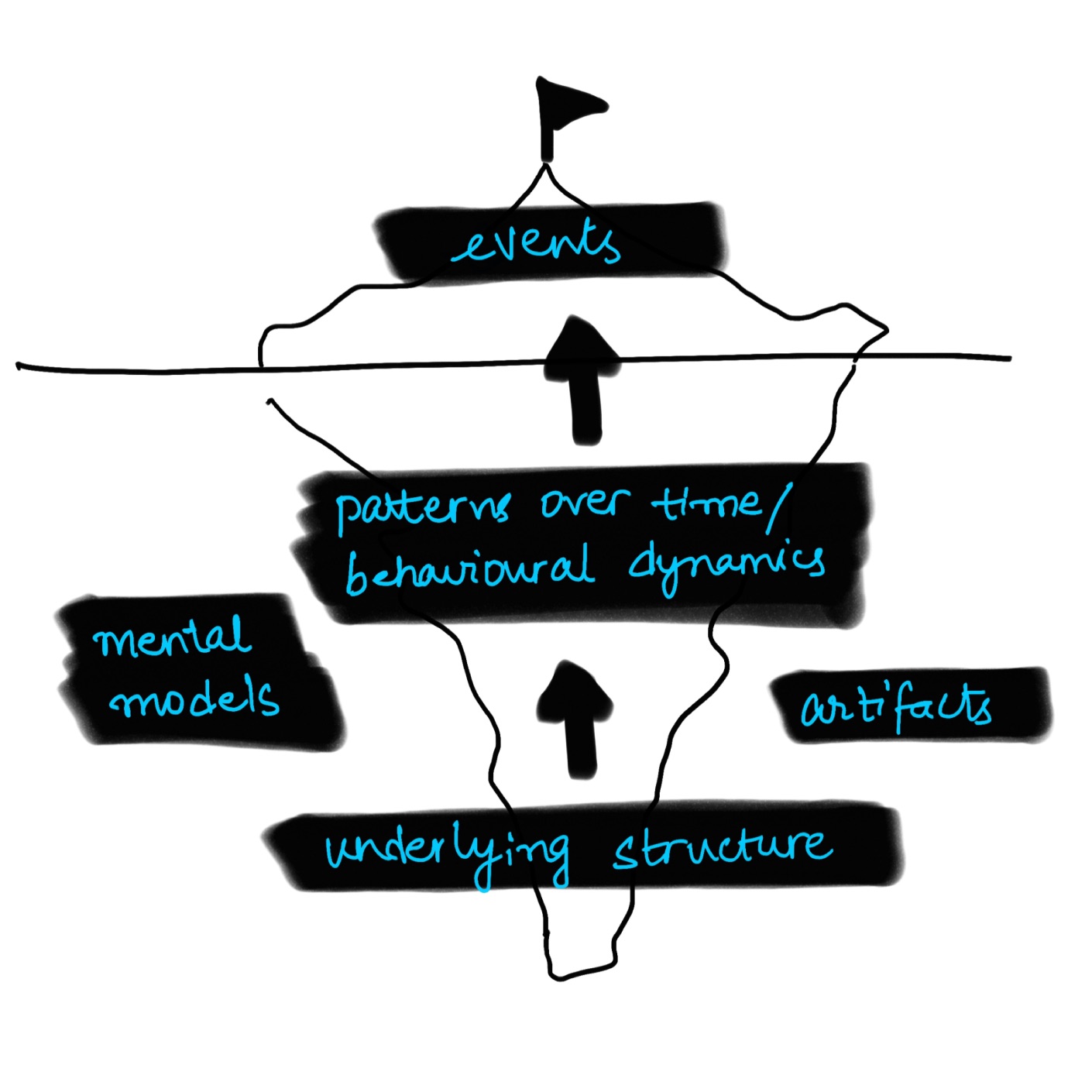
We work below the waterline.
Everyone can see the events — the thing that just happened, the fire being fought. Below the waterline is where the leverage actually lives: the patterns that repeat, the structures that produce them, and the mental models that shaped those structures in the first place.
Most coaching reacts to events. The work here goes three levels deeper — to the structure, and then to the thinking that built it.
The Ladder of Inference.
Between the raw data in a situation and the action you take, there are six invisible rungs you climb — usually in milliseconds. Most conflict, most bad decisions, most broken relationships happen because two people climbed different ladders from the same data and neither of them knows it.
This is the framework that makes the invisible thinking visible — so you can check the assumptions before the action.


The field a team creates together.
A social field is the invisible quality of relationships within a team — the atmosphere you create through how you listen, speak, include, trust, and respond to each other. You can't touch it. You can absolutely feel it.
A generative field is one where people feel safe enough to be seen, heard, and think out loud. When the field is generative, learning becomes possible, trust deepens, and hard conversations finally get had.
The question isn't only "what is happening here?" — it's "what kind of field are we creating together?"
The Spectrum of Connectedness.
How we relate to others is not fixed — it moves, often without our awareness. This framework maps the spectrum: from emotional disconnect at one end to agape, profound interconnectedness, at the other.
As we move away from presence and connection, our ability to understand interdependence reduces. We may begin to see others as separate, threatening, or less worthy of care.
As we move toward deeper connectedness, we become more capable of empathy, compassion, and wise action. The question is not just where you are — but which direction you're moving.

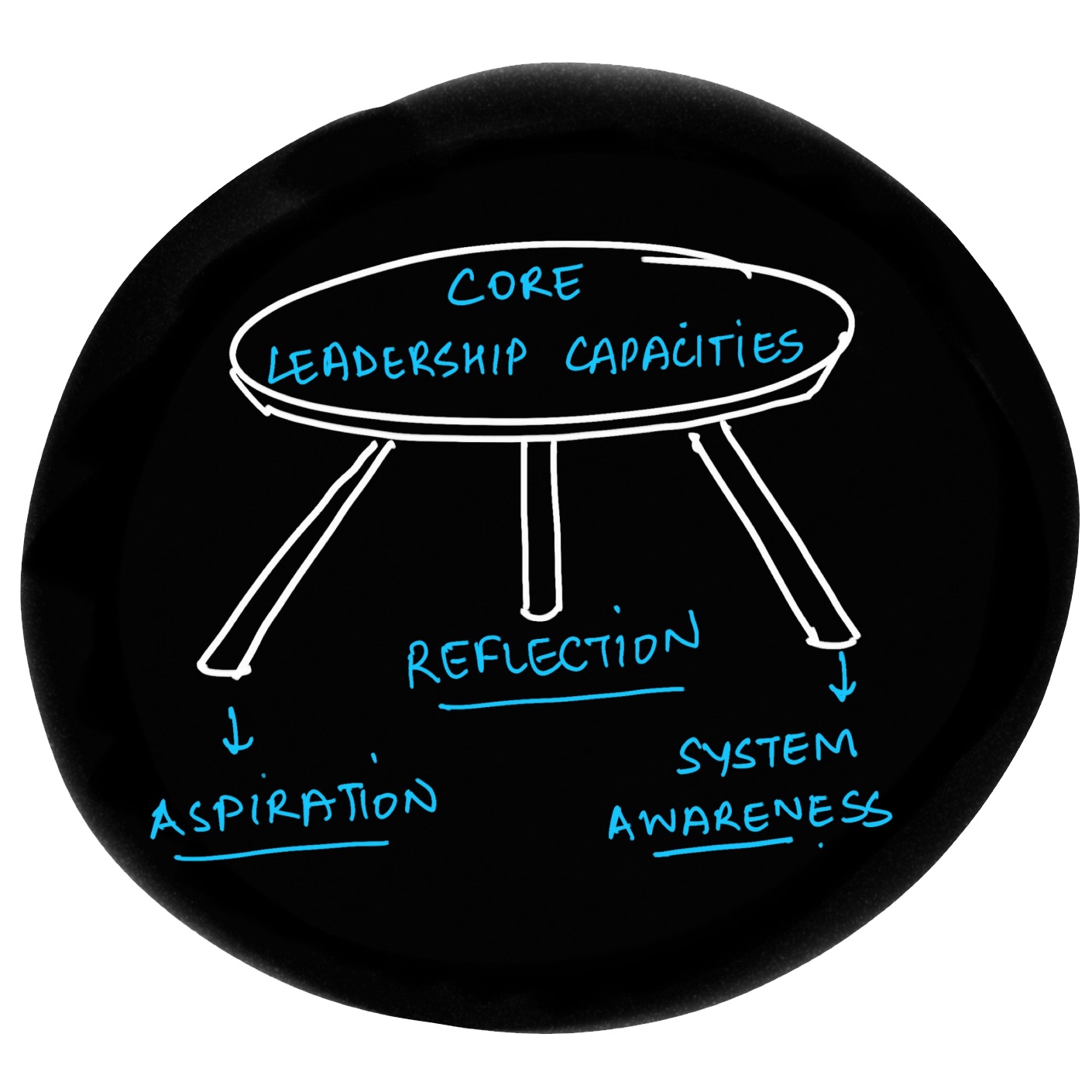
Three legs hold it up.
Aspiration, reflection, and system awareness — the three core capacities a leader keeps building. Lose one, and the whole thing tips. Most leadership development focuses on only one leg at a time.
The stool only stands when all three are strong and in balance.
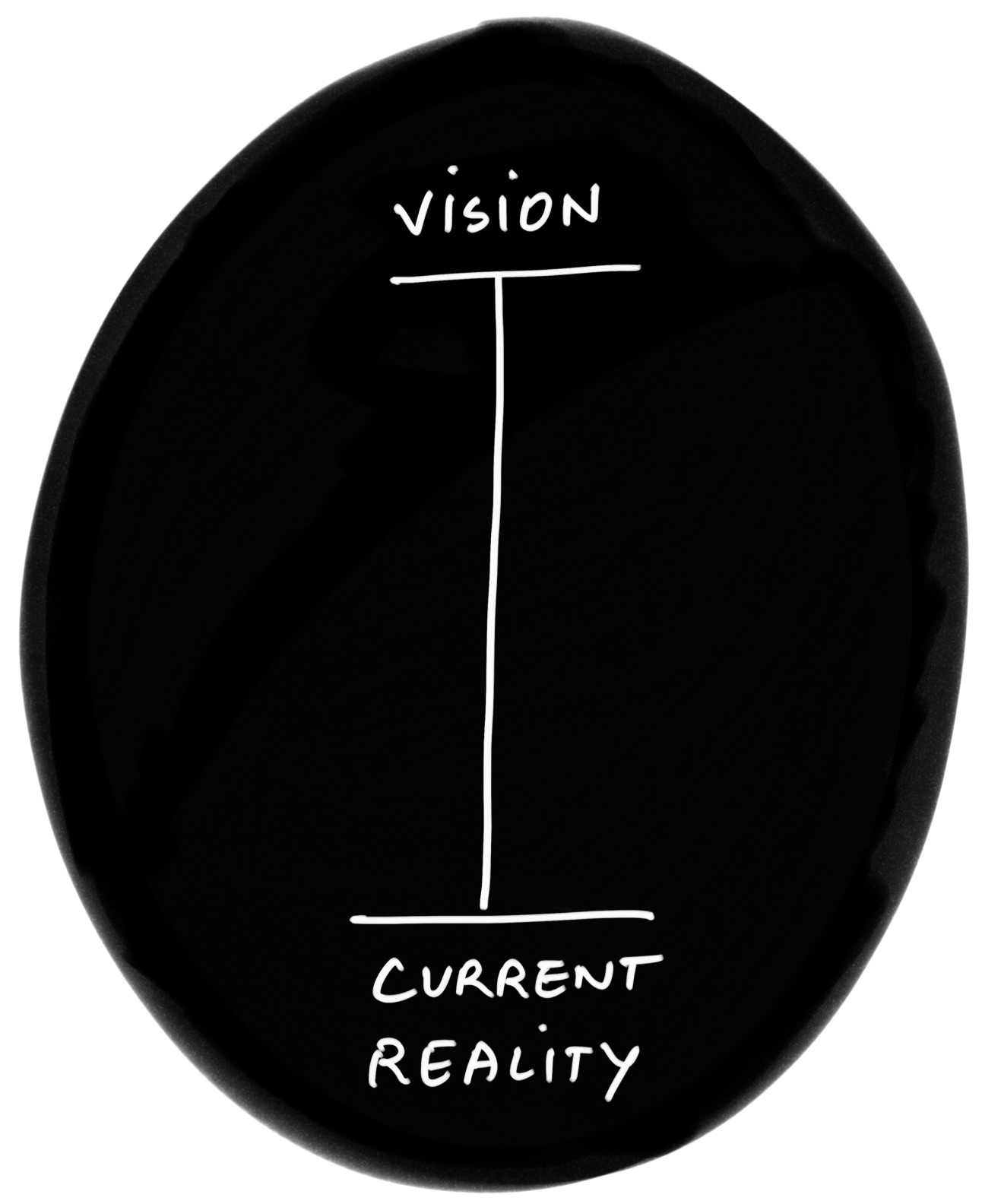
Vision versus current reality.
The gap between where you want to go and where you actually are creates a natural creative tension. That tension is the energy source for real change — not something to relieve by lowering your vision, and not something to paper over by denying current reality.
The work is learning to hold both — clearly, without collapsing either side.
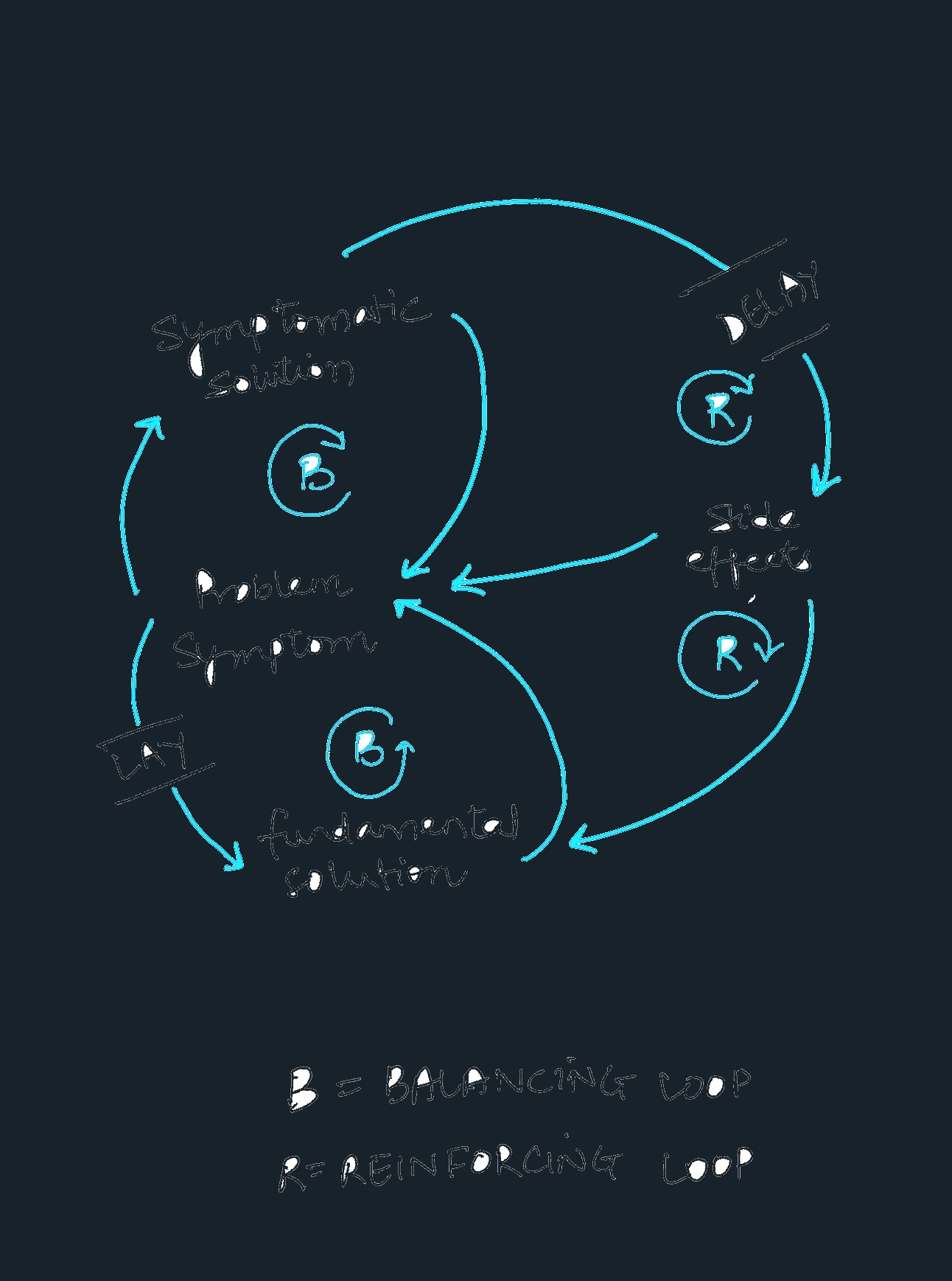
Shifting the burden.
A classic systems archetype — where a symptomatic solution relieves the pressure quickly, so you never invest in the fundamental solution. The problem seems to go away. And then it comes back, usually bigger.
The pattern appears everywhere in organizations: the founder who solves every problem themselves instead of building the team that can. The process patch that avoids the harder structural fix. The balancing loop that competes with the reinforcing loop for attention — and usually wins short-term.
Four trainable dimensions.
From the Center for Healthy Minds — four dimensions of well-being that can be deliberately trained. Not fixed traits, not personality types. Capacities that respond to practice.
